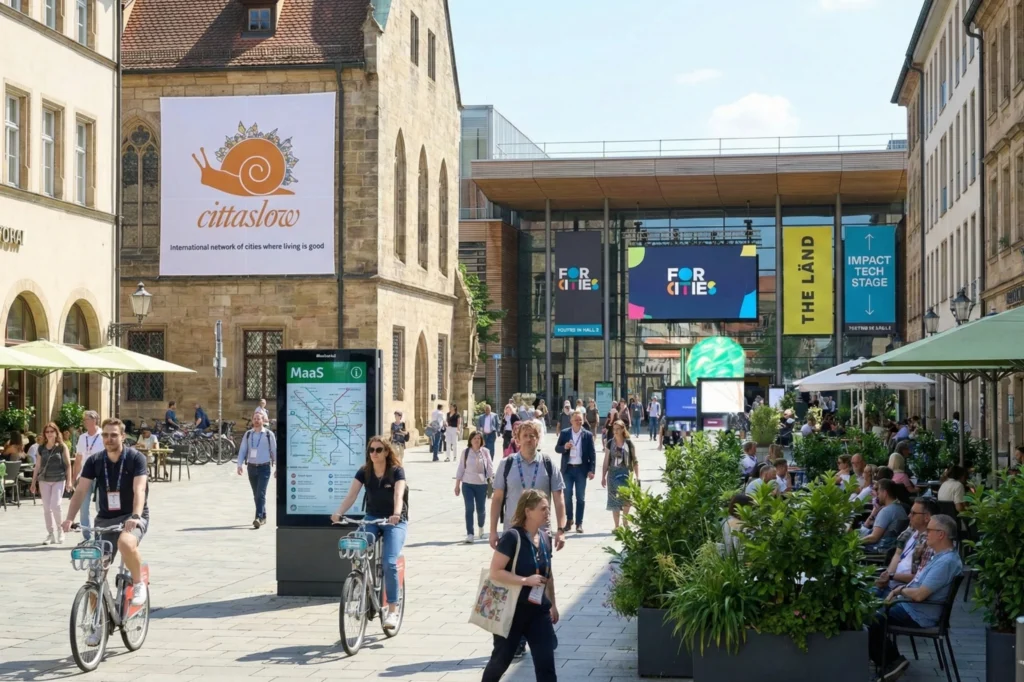
Moving through the city has never been just about distance. Every movement involves choices that shape our time, our mood, and the way we experience urban space. In this context, MaaS emerges as a fresh approach that reimagines how we consume mobility. By treating transportation as an on-demand service that adapts to people in constant motion, MaaS opens the door to smarter, more seamless urban journeys. Ultimately, it empowers users to navigate the city with greater ease, flexibility, and confidence.
Across Europe in the 2010s, MaaS (Mobility as a Service) started gaining momentum as cities searched for solutions beyond car-centric urban design. Meanwhile, nations like Finland, Austria, and Norway—long committed to public transportation and active mobility—provided the ideal setting for MaaS to flourish. Consequently, this approach established itself as a credible alternative to relying on private vehicles, offering a forward-thinking model for modern urban mobility.
MaaS (Mobility as a Service) and the New Mobility Paradigm
For decades, the automobile was seen as an essential asset for connecting work, school, home, and everyday activities. In many European cities, this model made individual travel easier but also degraded the urban ecosystem through congestion, excessive land use, and pollution. The greatest challenge emerged in “door-to-door” journeys — those that public transport could not fully cover.
It is precisely within this space that MaaS begins to make sense. By replacing the logic of owning transportation with the ability to access mobility, value shifts away from the vehicle itself and toward the freedom to choose the most effective mix of services for each moment. Thus, mobility evolves into a flexible and user-driven experience. In cities such as Helsinki and Vienna, this transition has helped redefine travel as contextual, adaptable, and more closely aligned with real urban life.

MaaS Demand-based Mobility is Not Just a Concept—It’s a Market-ready Solution, and MaaS Makes it Possible
One of the core contributions of Mobility as a Service (MaaS) is its ability to reverse the traditional logic of transportation planning. Instead of starting from the available infrastructure, the system is built around a specific and practical need: moving from one point to another. As a consequence, MaaS places users at the center of the mobility experience. Moreover, this user-first approach has enabled cities such as Oslo and Madrid to rethink how people travel through urban environments. By focusing on real movement patterns rather than physical assets alone, these cities are creating safer, more efficient, and more intuitive mobility ecosystems.
Every individual requires different mobility solutions—and those needs change throughout the day. For example, the same journey may be completed on foot, by combining public transportation, or by integrating micromobility options, depending on the context. Thus, flexibility becomes a key driver of efficient urban movement.
Urban Travel Is No Longer a Series of Disconnected Trips—It Is a Continuous Experience
When mobility is understood as a complete experience, movements no longer feel fragmented. By integrating planning, payment, and trip tracking from start to finish, users gain clarity and confidence throughout their route. Consequently, uncertainty and on-the-go improvisation are significantly reduced—an especially valuable benefit in dense, complex urban environments.
This integration also generates valuable data for cities. By analyzing how people move through urban spaces, municipalities can optimize mobility services, improve connectivity between neighborhoods, and strengthen long-term urban planning strategies. Therefore, mobility is no longer measured solely by speed or traffic volume. Instead, it is evaluated through the everyday, human-centered experience of moving safely and efficiently across the city.
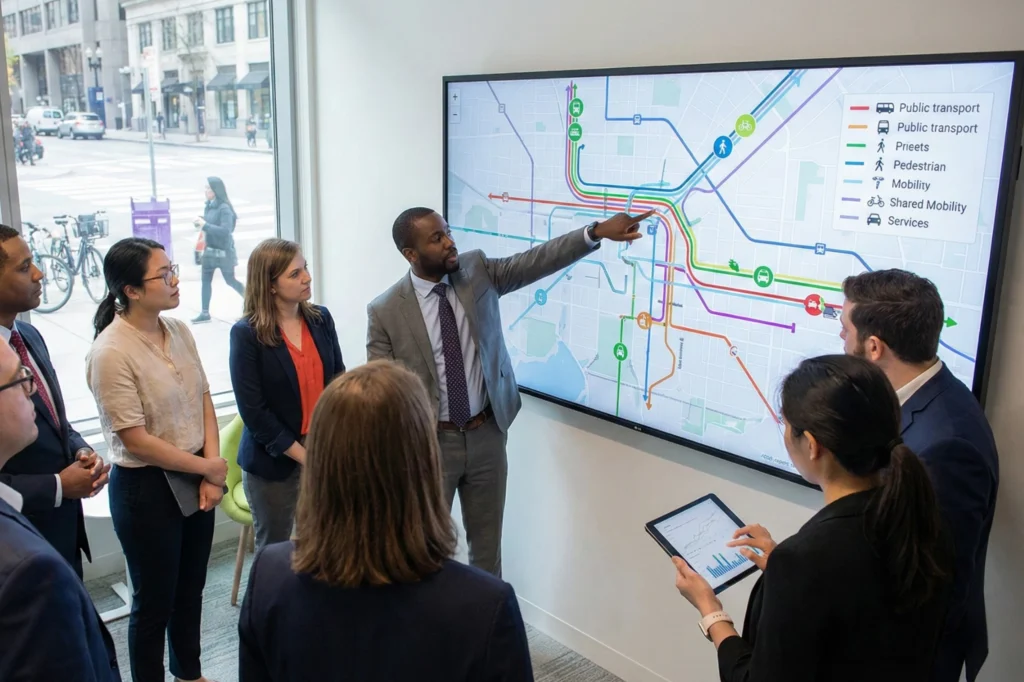
MaaS as a Tool to Humanize Cities
MaaS plays a critical role in shaping more human-centered cities. By expanding access to a diverse range of transportation services, it reduces dependence on private vehicles while promoting more inclusive mobility choices. Hence, cities across Europe with strong local communities have leveraged this model to reclaim public spaces as places for connection, shared use, and urban life—rather than merely as corridors of transit.
In addition, this approach challenges traditional ways of understanding urban movement. Rather than behaving as homogeneous traffic streams, people pause, engage with their surroundings, adjust their speed, and choose routes dynamically. Consequently, MaaS embraces the real complexity of city life and positions human experience at the core of modern mobility systems.
Public Policy Decisions and Real Urban Challenges
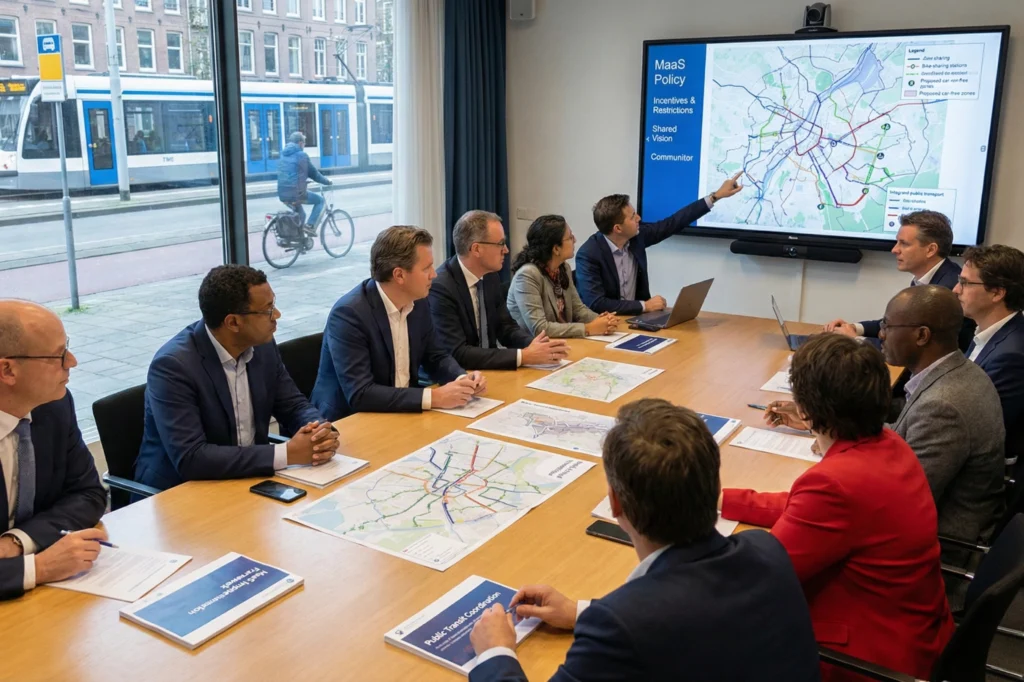
Implementing MaaS goes beyond technology alone. It requires strong institutional coordination, clear regulatory frameworks, and a shared vision for the city. In contexts such as Spain and the Nordic countries, this approach has evolved alongside public policies aimed at reducing private car use, while ensuring that those who still rely on it are not excluded.
The challenge lies in calibrating incentives and restrictions. To drive meaningful changes in mobility habits, cities combine measures that encourage more efficient options with policies that limit practices that overload urban space. Within this framework, MaaS serves as a connector—simplifying mobility offerings and guiding smarter travel decisions.
MaaS in the Mexican Urban Context
Mexico’s journey toward MaaS is not starting from zero. In urban centers such as Mexico City, a multimodal ecosystem is already in place, allowing different public transit services to operate through a unified access system. This setup encourages continuous trips, making the integration of various modes an intuitive element of everyday urban mobility.
The next phase goes beyond technology and calls for urban and institutional transformation. Advancing toward Mobility as a Service demands closer collaboration between key actors, integrated data, and travel choices designed around users’ needs. More than copying European approaches, the challenge is to translate their insights into solutions that respond to the unique social and spatial dynamics of Mexico’s cities.
A Perspective That Brings Cities Together
European experience clearly shows that MaaS delivers its full potential when it is integrated into a broader urban vision. Rather than operating as an isolated solution, MaaS aligns seamlessly with city models that promote more human-centered rhythms, accessible neighborhoods, and daily mobility less dependent on private cars.
At the same time, these ideas are shaped by collaborative spaces where cities from around the world exchange insights on urban planning, innovation, and mobility. Exploring slower-paced city models and engaging with the discussions taking place in international forums about the future of cities helps explain why MaaS is not just a tool, but a European lesson that invites us to keep rethinking how we move—and live—better in our cities.